

Tinting a Tesla Glass Roof: Heat, Glare and What to Expect
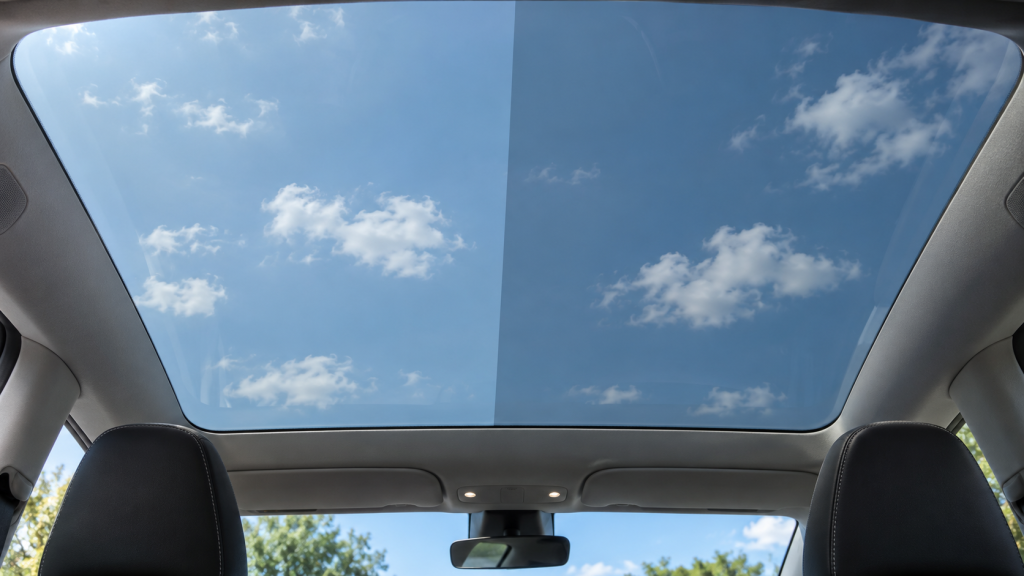
Yes, you can tint a Tesla glass roof, and many Texas owners do. Tesla’s roof glass already comes tinted, with UV protection and an infrared reflective coating, so it is not bare glass. Ceramic roof film adds more heat and glare control on top of that, which is what you want if you still feel the sun on your head and shoulders on a summer drive.
The right film depends on your model, year and roof glass. A light shade can preserve the open view, but shade alone does not tell you whether a film is suitable for that glass.
What Heat and UV Tesla’s Glass Roof Already Blocks
Before you pay for roof film, it helps to know what you already have. Tesla’s Model Y design page lists “laminated safety glass on cabin windows and roof” and “tinted safety glass with metallic infrared reflective coating across the roof.” For the Model 3, Tesla says “infrared and ultraviolet light is effectively blocked before entering the cabin,” which it says cuts heat and glare even with the sun straight overhead. Tesla describes the Model S as having an all-glass roof.
The factory glass already provides strong UV protection. Tesla’s owner’s manuals rate the roof, windshield and windows as excellent UV protection, with the glass scoring under 2 on the UV Index scale. So on the roof, film is mostly about heat and glare, not about UV.
Factory glass specifications vary by model and year. The Tesla descriptions cited here do not give a comparable heat-rejection figure for every roof, so a film rating on its own cannot tell you how much extra heat it will keep out of your particular car.
Why You Still Feel Heat Through Your Tesla’s Roof
On a July afternoon in North Texas the sun is high, and the roof is the glass facing it most directly. It also sits right above every seat. So even with a good factory coating, owners in hot states often say they still feel warmth on the top of their head on long midday drives, and that kids in the back seat squint at the sun. Tall drivers notice it most, since their heads sit closest to the glass.
Glare can be a separate source of discomfort. The International Window Film Association describes glare as what happens when there is more light in your field of view than your eyes can adjust to. Some owners find the cabin too bright on clear days, even though they love the view.
How heat moves through glass, and why a light ceramic film can beat a dark low-grade one, is its own topic. We explain it in our post on whether ceramic tint keeps your car cooler.
What Additional Roof Tint Does for Heat, Glare and Privacy
Window film goes on the inside surface of the glass, and on a Tesla roof it works together with the factory coating. Here is what a good ceramic roof film gives you:
- Less heat on your head and shoulders, because ceramic film turns away infrared, the invisible part of sunlight that warms your skin. Our Ultra Ceramic is listed as a 2-mil film with four ceramic layers and 95% infrared rejection. That film rating is not a measurement of the extra heat rejection on top of Tesla’s factory roof.
- Less glare from above, because every shade of film cuts some visible light, and darker shades cut more.
- More privacy from above, which you notice in a parking garage or next to a lifted truck at a light, where people can look down into the cabin.
- Non-metallic film, so it does not add a metal layer that can interfere with cell signal, GPS or your toll tag.
Be realistic about one thing: film does not keep a parked car cool. A Tesla left in a Texas parking lot all afternoon will still be hot inside. Film reduces the solar energy passing through the glass, helping with heat and glare while you drive.
Is It Safe to Put Film on Laminated Roof Glass?
This question makes some owners nervous, and it is fair. Forum threads say roof film can crack the glass, and some shops will not tint a roof at all. Here is what the film industry itself says.
The IWFA Automotive Education Guide explains that most car side windows are tempered glass, which handles the stress of sun and temperature changes very well. Laminated glass is different. It is two layers of glass bonded to a plastic layer between them, and the guide says those layers are usually annealed glass, the type that can crack from thermal stress. Tesla calls its roof laminated safety glass.
The same guide notes that more cars now use laminated glass in sunroofs, some with solar control built into the middle layer and a thin inner pane. For those, it tells installers to check with the film maker which films suit that glass. It also warns that glass coatings can be scratched during an install.
None of this says roof film will crack your glass. The film needs to be suitable for the specific roof glass. So here is what we tell people, whoever they hire: ask which film goes on the roof and whether the film maker approves it for your model’s roof glass, and point out any chip or crack in the roof before the work starts. The glass also needs careful cleaning and handling to avoid scratches during installation.
Does Roof Film Affect Your Tesla Warranty?
Adding roof film does not automatically cancel the whole vehicle warranty. Coverage for a particular glass claim depends on the applicable warranty and what caused the damage.
Two exclusions are worth knowing about. The warranty does not cover damage caused by parts or accessories that are not genuine Tesla parts, or by their installation. It also does not cover cracked or chipped glass unless the cause is a defect in Tesla’s glass. If film or its installation caused a roof crack, that damage may fall outside Tesla’s warranty coverage. That is one more reason the install matters.
Our own film is backed by a lifetime warranty against bubbling, peeling and fading. Our one-time no-fault warranty covers eligible side windows only, so it does not extend to the roof. Our window tint warranty post spells out what each one covers.
Is Roof Tint Legal in Texas?
The Texas DPS window tinting standards set rules for the windshield, the windows to the left and right of the driver, the side windows behind the driver and the rear window. Roof glass and sunroofs are not on that list. The front side windows are the strict ones: they must let in at least 25% of light, measured with the glass and the film together.
If you are also considering windshield film, the rules are different. Tinted film is allowed only above the AS-1 line, a small mark near the top of the glass, or in the top 5 inches if there is no mark. Clear, untinted UV film is allowed on the whole windshield. Since the DPS rules set no darkness limit for the roof, the shade you pick up there comes down to comfort and looks, which is the next question.
Choosing a Shade for Your Tesla Roof
Start from this fact: the factory roof is already tinted. The installed light transmission depends on both the film and the factory glass, so the film’s shade number is not the final reading through your roof. That is why many owners who love the open feel go with a light ceramic shade on the roof.
A lighter film keeps the cabin bright and the sky easy to see, including the night sky, while still cutting infrared heat. A darker film cuts more glare and adds privacy, but the cabin feels more closed in, and the view of the stars at night fades. Some owners prefer a darker cabin; others want to preserve the open view.
Tell us whether heat, glare or a darker look matters most. We can help you choose a suitable shade without making the roof darker than you want.
Roof Film or a Sunshade?
A clip-in roof sunshade and roof film solve slightly different problems, and plenty of owners end up with both.
- A sunshade reduces overhead light and can help with comfort when parked or driving. How much of the view it blocks depends on whether it is mesh or opaque, and you can remove it when you want the open view back.
- Roof film stays on all the time and keeps the roof see-through, so you get less heat and glare on every drive without giving up the view.
If overhead heat or glare bothers you only a few weeks a year, a removable shade may be all you need. For regular summer driving, roof film reduces heat and glare while keeping the glass see-through.
Should You Tint the Roof or Side Windows First?
Not always. Roof tint can be added to your Tesla window tint installation, and you can start with the glass that bothers you most. If the sun on your arm and face through the front windows bugs you more than the heat overhead, start there. If your kids in the back seat are the ones squinting, the roof and rear glass may be the better first step.
You can have the side windows, rear glass and roof tinted during the same appointment, with suitable clear film on the windshield. Our Tesla window tinting page explains the options for each glass panel.
What to Expect on Install Day
A Tesla roof is large and curved, so it takes more time than a side window. Most shops lay the film in as few pieces as the glass allows and use heat to shape it to the curve, so it sits flat with no creases. Our patterns are computer-cut to your exact model and year, and any old film comes off and the glass is cleaned before the new film goes on.
Most tint installs take one to four hours, and the roof adds time, so tell us what you want covered when you book. At our Roanoke shop the film goes on indoors, out of the wind and dust that can get under fresh film. If you would rather stay home, our mobile window tinting service brings the same film and warranty to you; mention the roof when you book.
If side windows were tinted too, keep them up while the film cures. A light haze under fresh film is normal and clears as it dries, and our window tint aftercare guide covers how to clean the inside of the roof glass once it has set. A roof this size is not a do-it-yourself job either, because fitting a large, curved sheet overhead without creases or trapped dirt takes practice.
Tesla Glass Roof Tint FAQ
Does Film Go Over the Factory Tint?
Yes. The factory tint is part of the glass itself, so there is nothing to strip off. The film goes on the inside surface, right over it, and the two work together.
Will Roof Film Affect Autopilot or My Cameras?
Roof film does not cover the forward cameras behind the windshield. That is separate from the film being non-metallic: avoiding a metal layer helps prevent radio-signal interference, while cameras need a clear, unobstructed view.
Will the Cabin Feel Dark With the Roof Tinted?
It depends on the shade and the factory glass already in your car. Even a light film reduces some visible light, so discuss the finished look before choosing, especially if keeping the view of the sky matters to you.
Can I Tint the Roof on a Leased Tesla?
Check your lease before booking. Tesla’s lease-return guide lists modifications to factory tint as excessive wear; third-party lessors may have different terms. If removal is required, arrange professional removal before return, since taking film off can damage a glass coating.
Book Your Tesla Roof Tint
If heat or glare through your roof bothers you, call or text (817) 670-8548 with your model and year, and tell us whether heat, glare or both are the problem. We are open seven days, 8am to 6pm, by appointment, at our Roanoke shop or at your home. See the window and roof tint options on our Tesla window tinting page, and we will help you decide whether roof tint is worth adding for the way you drive.