
Protect your vehicle’s paint with professional ceramic coating from AutoPro DFW. We apply durable, hydrophobic coatings that help your finish resist UV damage, road grime, and chemical staining, while adding depth and gloss. Every job starts with a paint assessment, so the package we recommend fits your vehicle. We bring more than 15 years of experience and a 4.9-star Google rating to every vehicle we coat. Contact us for a quote.
We provide professional ceramic coating by appointment for drivers in Roanoke and throughout the DFW Metroplex. Ceramic coating is a liquid product, usually based on silicon dioxide, that bonds to your vehicle’s clear coat and cures into a protective layer. Unlike wax or sealant, it holds up for years with proper care.
Proper application requires a clean work area and controlled conditions. We apply each product within its recommended temperature and humidity range, since that affects how the coating levels and bonds.
The most noticeable difference is how water behaves on the paint. Water beads on the surface, while dirt and road grime are usually easier to rinse away. Bird droppings, tree sap, and road film are also easier to remove before they stain the paint.
The coating also helps the paint resist UV-related oxidation and fading, which matters on vehicles that sit outside in the Texas sun. And it adds noticeable depth and gloss. With proper care, it can last for years instead of the weeks or months you would expect from wax or a paint sealant.
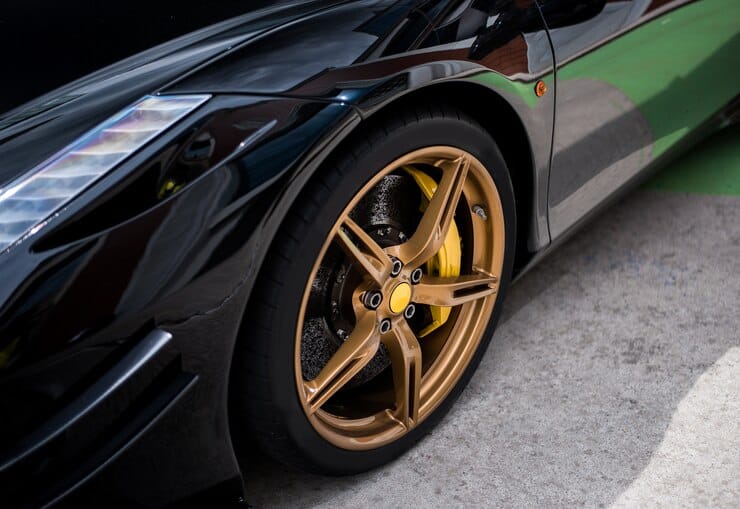
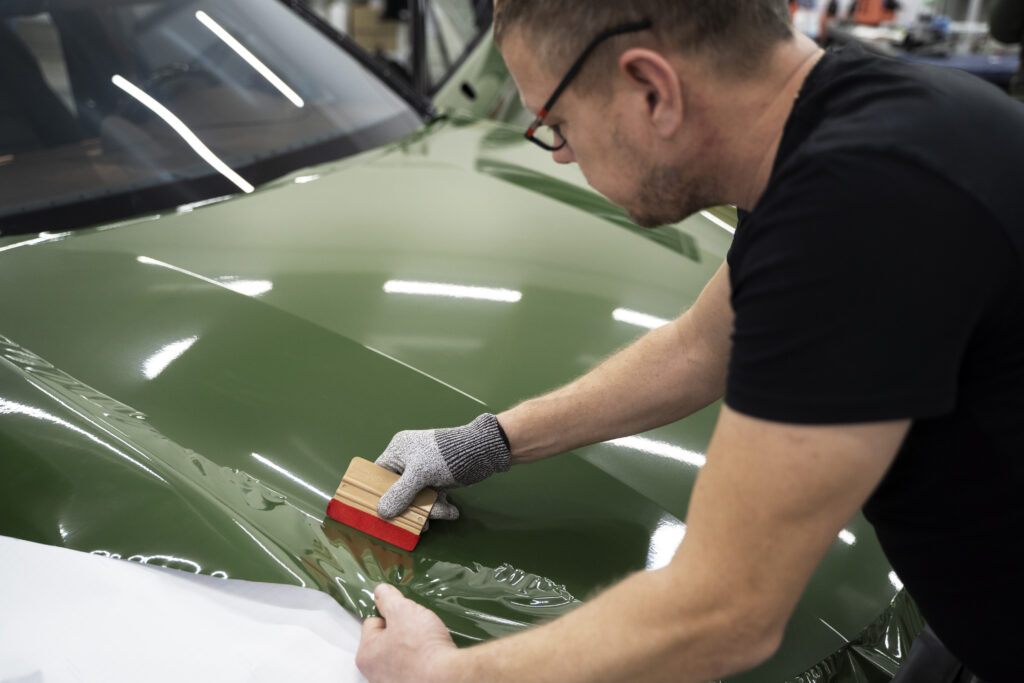
Wax, sealant, ceramic coating, and paint protection film protect paint in different ways. The right option depends on whether you mainly want easier maintenance, longer-lasting surface protection, or protection against rock chips.
Carnauba wax adds warmth and shine, but it breaks down within weeks in Texas heat. Synthetic sealants last a few months longer than wax, but they also sit on the surface and wash away. Ceramic coating bonds to the clear coat itself and protects for years. Paint protection film is a much thicker urethane layer, and if rock chips are the main concern, it is the better choice.
Many owners combine the two: PPF on high-impact areas such as the hood and front bumper, with ceramic coating applied across the vehicle.
Ceramic coating does not hide swirls or scratches, so paint preparation comes first. We inspect the finish under bright light. After the inspection, we include any recommended paint correction in your quote.
Paint in good condition may only need a light polish to remove shallow swirls and restore gloss. Neglected or heavily swirled paint may need multi-stage correction, starting with a cutting step followed by one or more refining passes. If a defect is too deep to remove safely, we reduce it as much as possible without over-thinning the clear coat.
We inspect the finish under bright light and note swirls, scratches, oxidation, and bonded contaminants that need to come off before coating.
We wash the vehicle, then use an iron remover to dissolve embedded iron particles. Tar, overspray, and other stuck-on contamination come off with clay or a dedicated remover.
We complete the correction covered in your quote before applying the coating.
We wipe each panel down to strip polishing oils and residue, so the coating can bond to clean clear coat.
We work one panel at a time and level the coating before it begins to set.
The vehicle needs to stay dry during the first few days while the coating begins to harden. The coating keeps gaining hardness and chemical resistance for another two to three weeks.
We check the finish under bright light for even coverage and high spots before we return the vehicle to you.
You get simple instructions covering the first wash, which products are safe, and when to come back for a maintenance check.
We offer three coating options based on how long you plan to keep the vehicle:
Most jobs land between $1,500 and $5,750. A vehicle that needs more paint correction averages around $2,000, and a new vehicle about $1,500. Contact us for a firm quote once we have seen your paint.
Ceramic coating is not scratch-proof. The layer is far too thin to stop rock chips, deep scratches, or dents. For that kind of damage, paint protection film is the better option.
It also cannot fix damage that is already in the paint, so existing swirls or oxidation need correction before the coating goes on. It does not make a vehicle self-cleaning, and it will not stop fading completely. Washing gets easier and less frequent, but the vehicle still needs regular washes and still does best parked under cover.
You leave with care instructions, and you can reach us with questions after you pick up your vehicle.
We have more than 15 years of automotive appearance experience, including ceramic coating, paint protection, and detailing. Our work has earned us a 4.9-star rating from more than 200 Google reviews. We understand what North Texas vehicles deal with: summer heat, long hours in the sun, hard-water spots, and highway grime.
We inspect the paint before recommending a coating option and include any necessary preparation in the quote. We work by appointment so we can give each job the time it needs, from surface preparation through the final inspection.
Our Roanoke location serves drivers across north Fort Worth, Denton County, and the surrounding communities. We have dedicated pages for the areas we serve most:
We also serve Keller, Southlake, Argyle, Ponder, Rhome, Grapevine, and nearby communities. If your city is not listed, contact us to confirm availability.
The price depends on vehicle size, paint condition, and the package you choose. We quote each vehicle after seeing the paint.
Yes. New paint is in its best condition, which makes it a good time to coat. We still inspect it first, since even new vehicles can pick up light wash marks from transport or dealer prep.
Consumer kits are available, and the result depends far more on preparation than on the product itself. Without thorough decontamination, correction, and careful leveling, the finished surface can look uneven, and any defects left in the paint get sealed underneath.
No. 9H comes from a pencil hardness test used by coating manufacturers. It is a lab measurement, not a guarantee against real-world scratches, and ratings above 9H are not part of any recognized standard.
We protect your ride with the care it needs to shine for its lifetime
Copyright © 2025 | AutoPro DFW – All Right Reserved